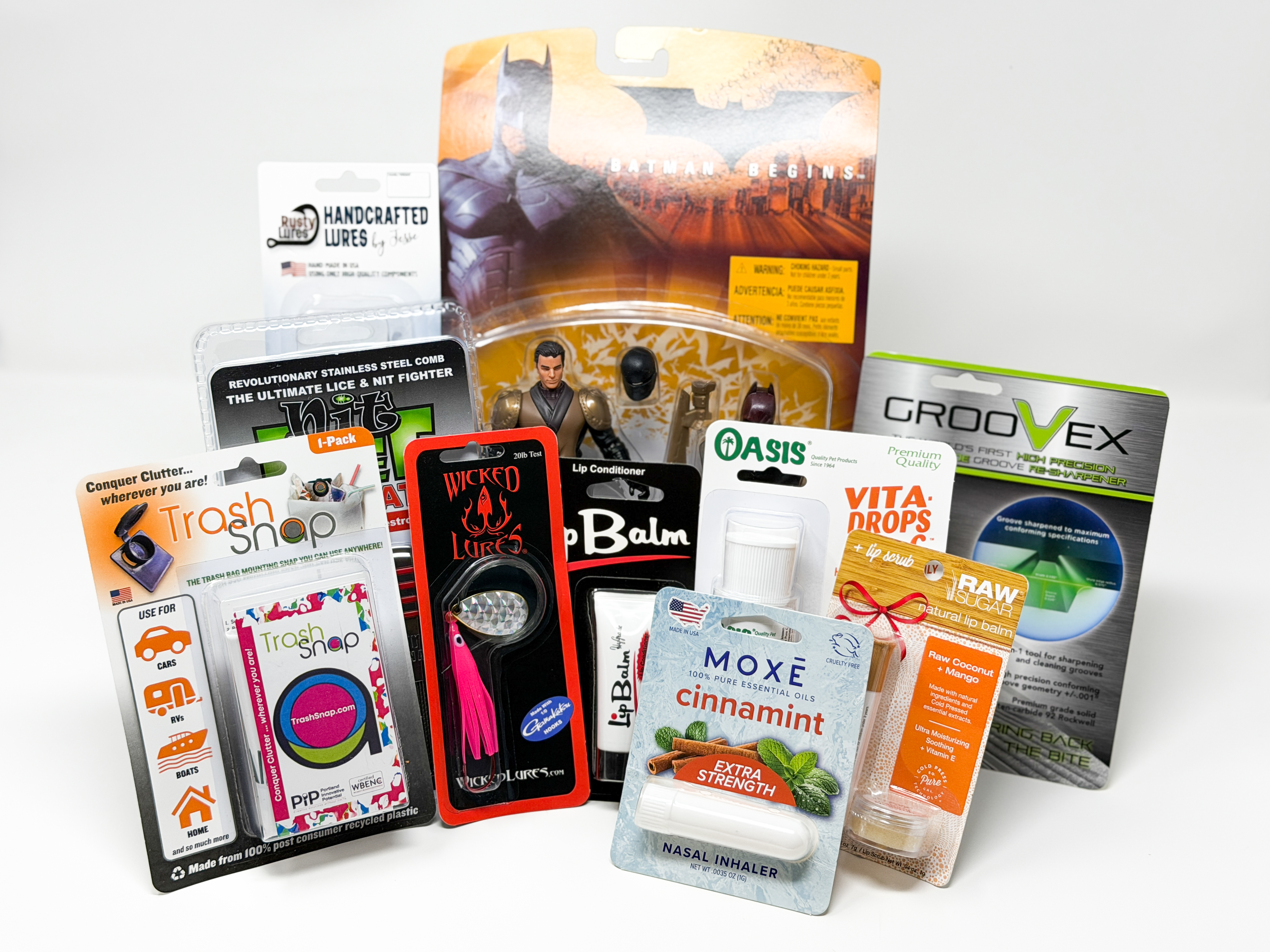
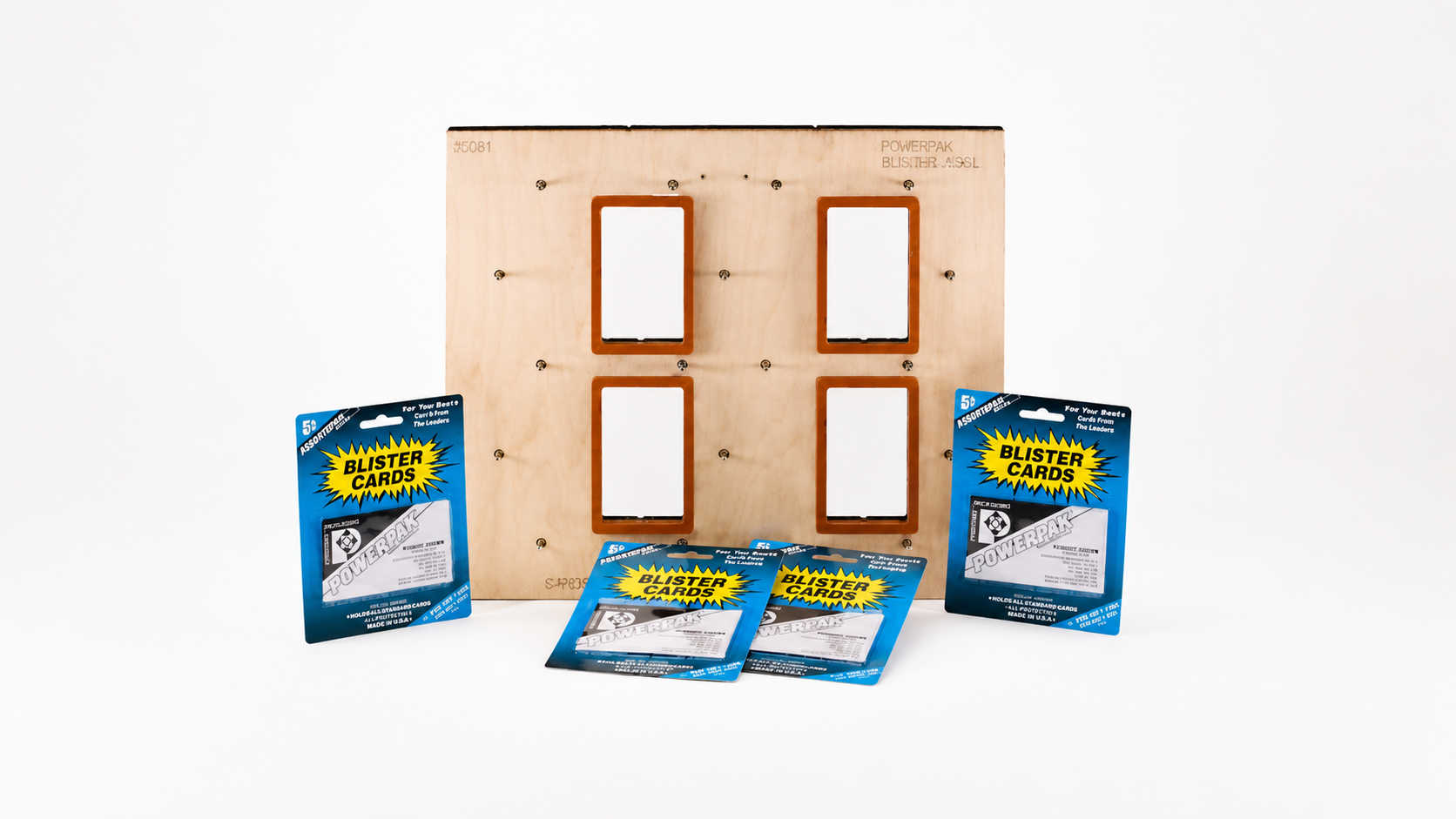
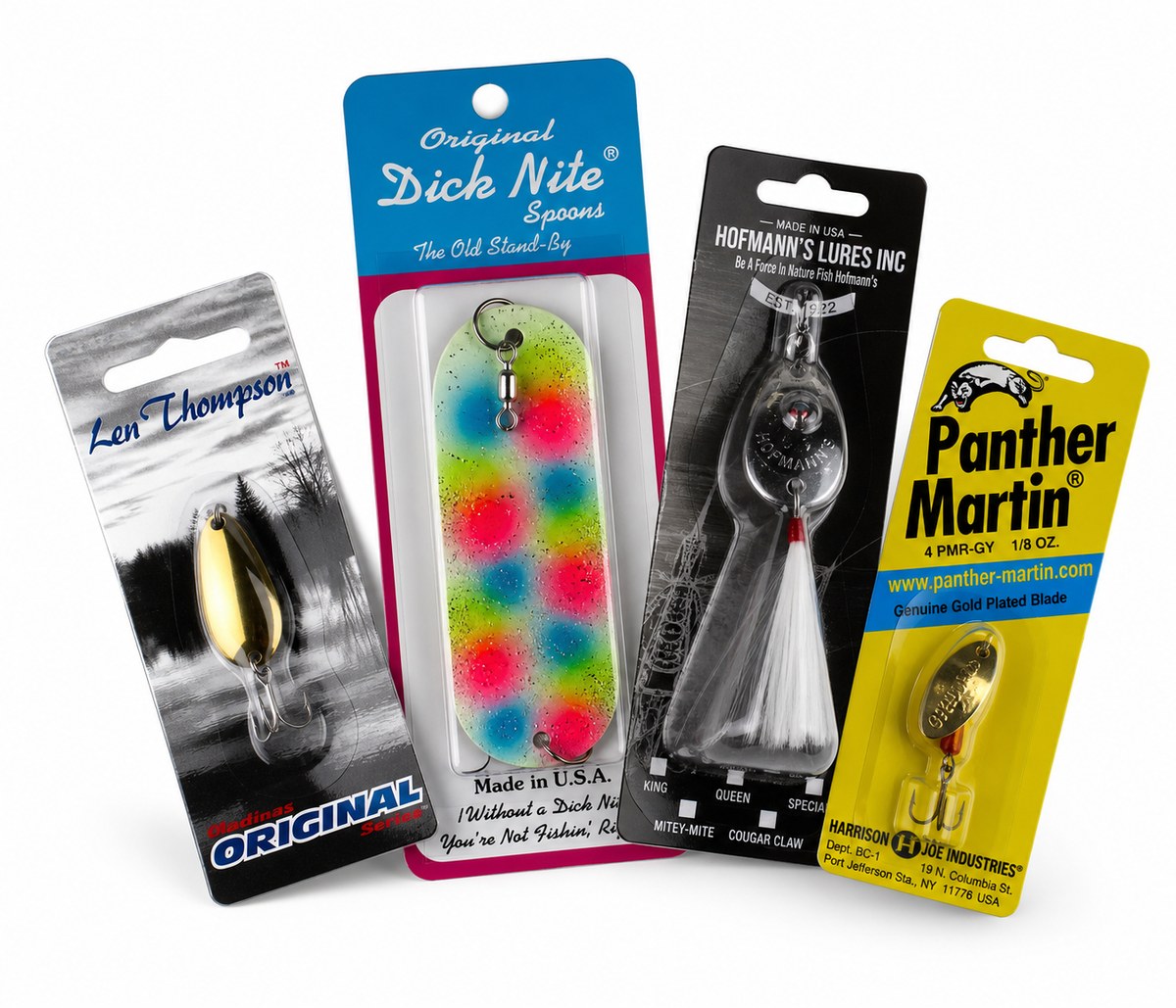
Blister packaging didn’t just shape the retail world — we helped create it.
Since 1949, we’ve been the pioneers of blister packaging, providing both the equipment and the supplies that power production lines across industries. From concept to completion, our systems are engineered for performance, precision, and reliability — delivering packaging that protects, showcases, and sells.
Whether you’re packaging fishing tackle, hardware, tools, or specialty retail products, we supply the machinery, materials, and expertise to keep your operation efficient and competitive.
Innovation built on legacy. Equipment built to last. Packaging built to perform.
Our Story
When it comes to blister packaging, we may know a thing or two.
Thanks to the late Peter Green. Proud dad of now CEO, Bob Green.
He not only left behind a charming smile, a witty sense of humor, and a loving family… but something important Powerpak incorporates into our business practices today: INTEGRITY.
It all started when Peter Green owned a company “Century Printing LTD.” He was approached by Aaron Fish, CEO of “ILCO UNICAN” who had a hardware line. He complained that their products were being stolen out of bins. Peter took some samples and saw his good friend and thermoforner, John Fisher. John mostly formed chocolate trays, but Peter asked him to try to form clear plastic over ILCO Unican’s products.
After successfully doing so, he printed the cards, created the machine, sealed the packs and the rest remains history!
See How we WORK in Blister Packaging
Blister Packaging Manufactures
The Original & Affordable
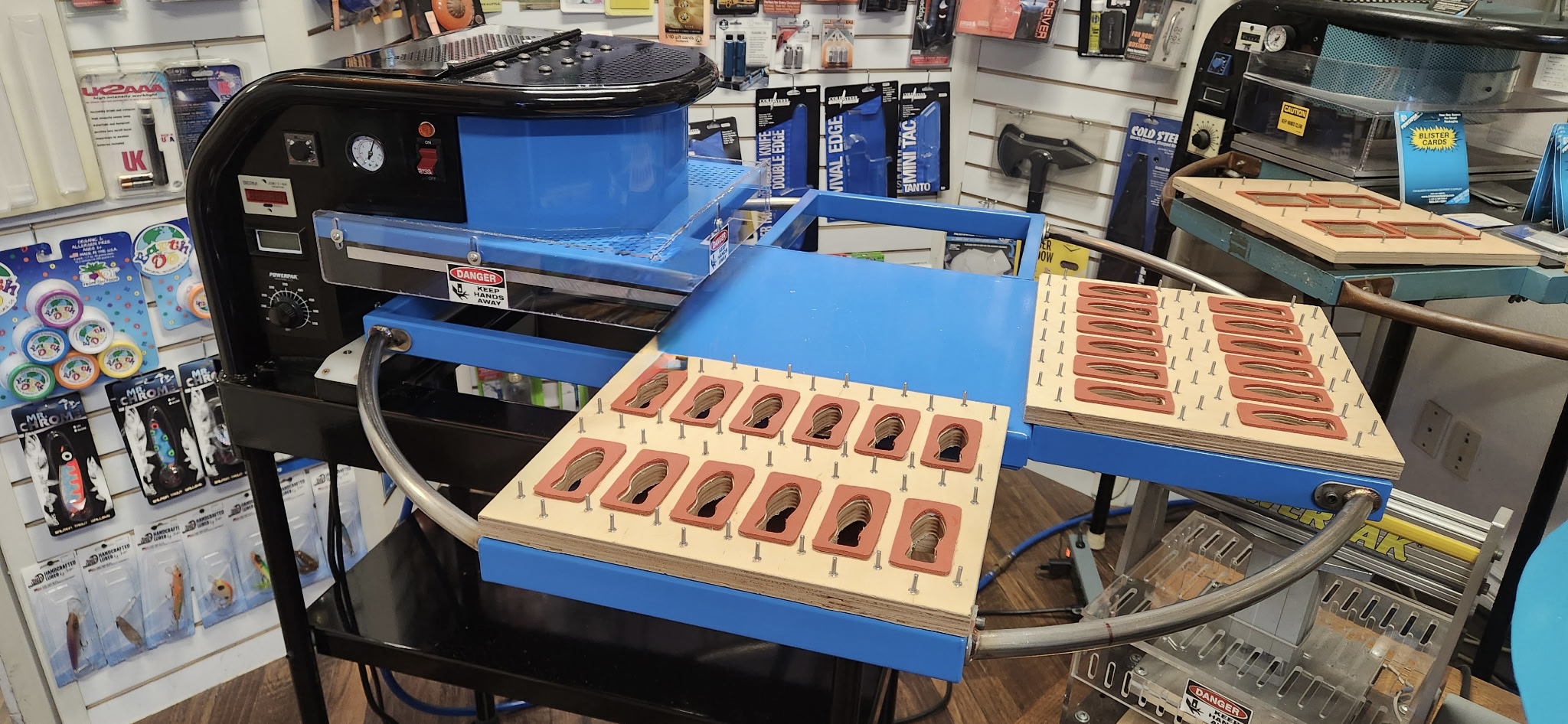
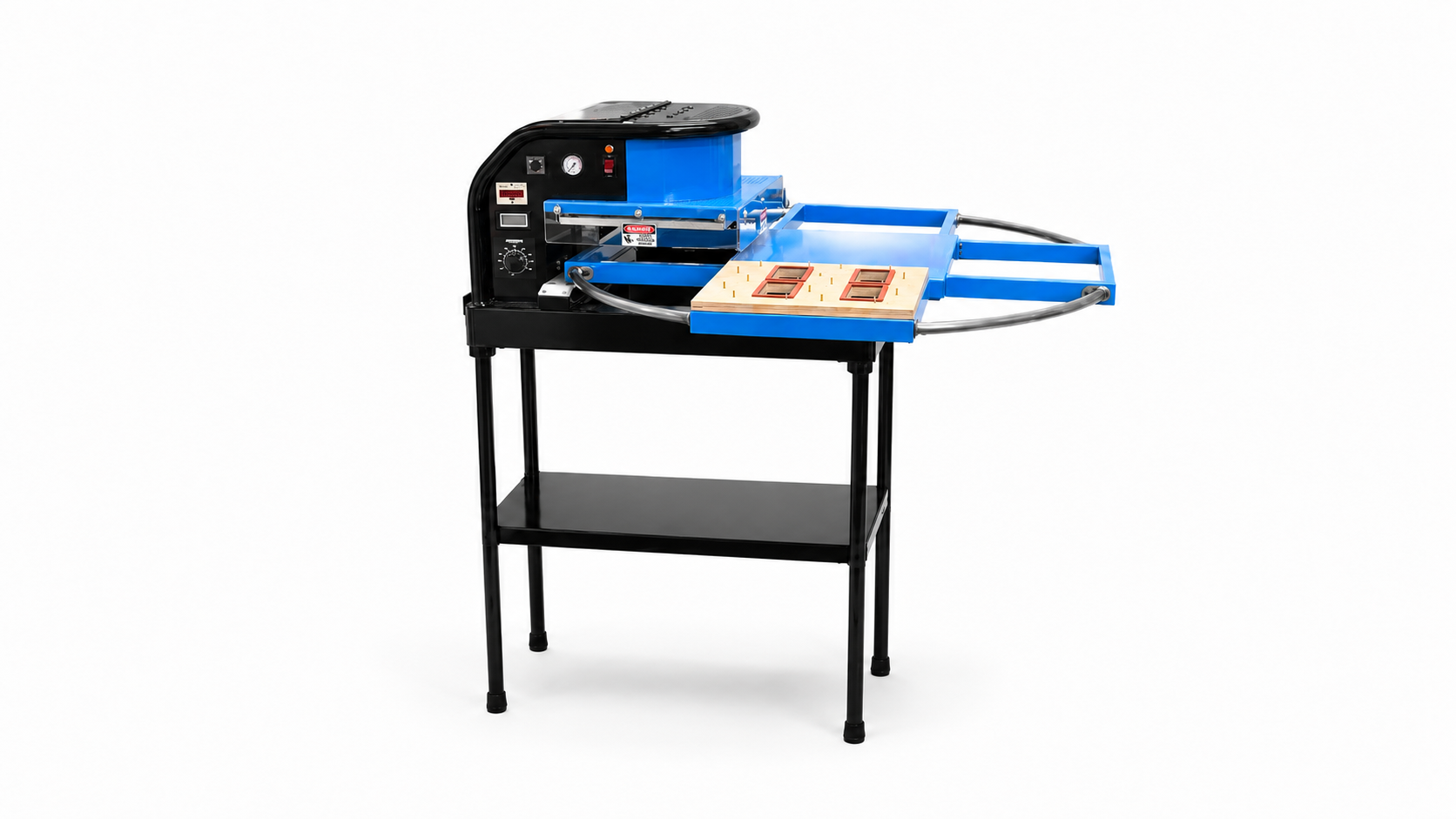
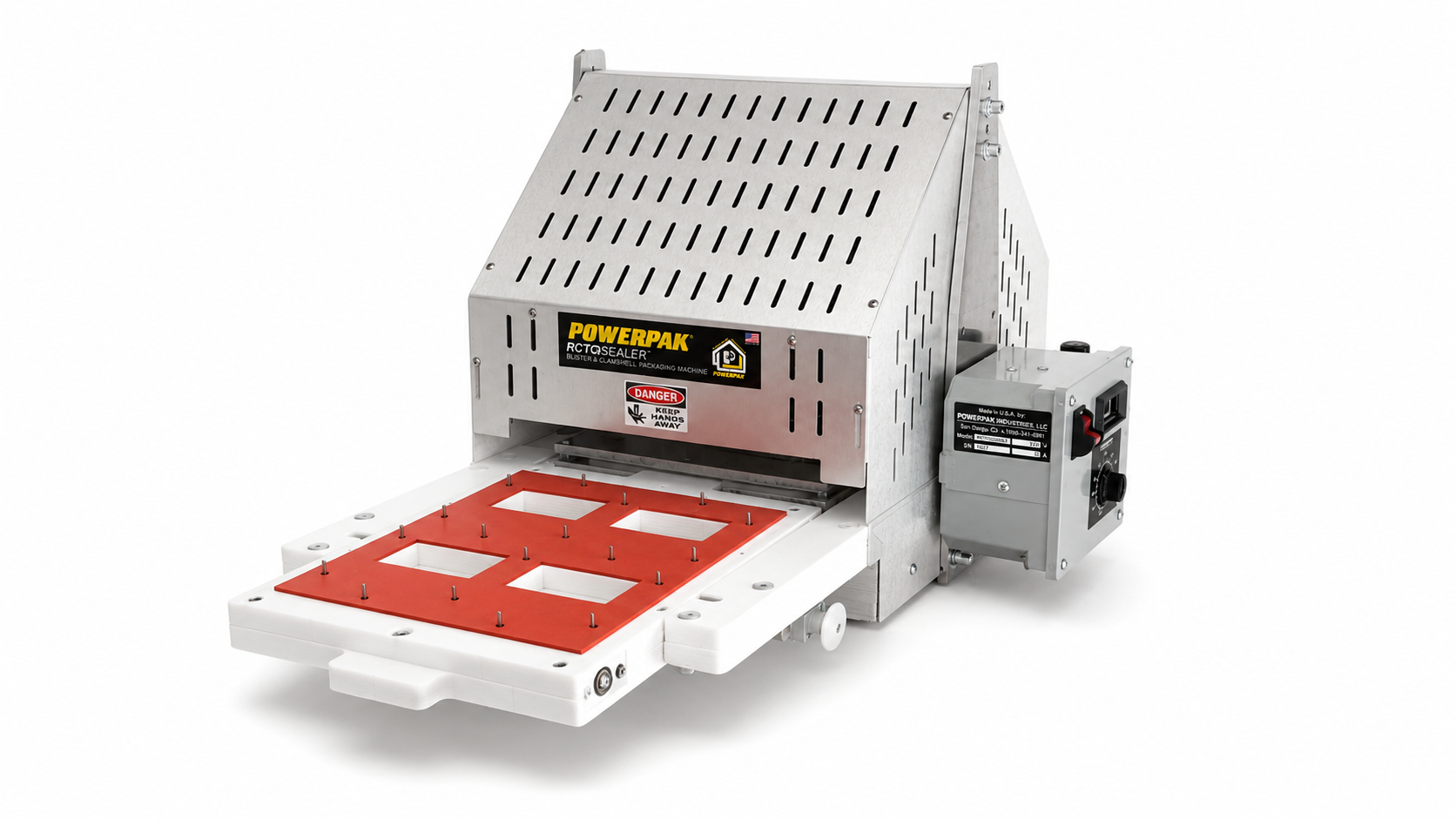
2-in-1 Blister/Clamshell Packaging Machine
- 4 - Station (Manual Rotary Table)
- Self - Indexing Guide
- Accommodates Blister Packs & Clamshell Packs
- 1-3 Person Operation
- Virtually Maintenance Free
- Runs Quietly & Economically
Affordable Retail Packaging
Whether you’re looking for blisters, cards, or clamshells, POWERPAK has got you covered!
- Clear visibility for product display
- Tamper-proof seals for added security
- Customizable shapes and sizes
- High-quality, durable materials
POWERPAK’s Blister packs and Blister Cards are made with only the highest quality materials. All cards and blisters are 100% consumer recyclable.
Standard blister packs use thermoformed plastic sealed to paperboard or foil. This format remains widely used because it balances cost, clarity, and protection. Many manufacturers are also exploring recyclable packaging materials to improve sustainability without sacrificing retail durability or product visibility. It works well for small to mid-sized items where customers need visibility and retailers need consistency.
Manufacturers often choose this format when they need space for instructions, compliance labeling, barcodes, and branding without overengineering the package.
Blister card packaging combines a printed card with a sealed plastic cavity. The card does more than display graphics. It affects hanging behavior, shelf spacing, and retailer acceptance.
We design card size, hang hole placement, and seal strength based on how the package will actually be stocked. This matters when products move across multiple retail chains with different fixture systems.
Foldover packs fully enclose the product by folding plastic over itself and sealing the edges. Once sealed, access becomes obvious. This discourages casual tampering.
Manufacturers often select foldover packs for electronics, sharp items, or higher-value products where returns and theft are recurring concerns. The structure also improves durability during shipping and restocking.
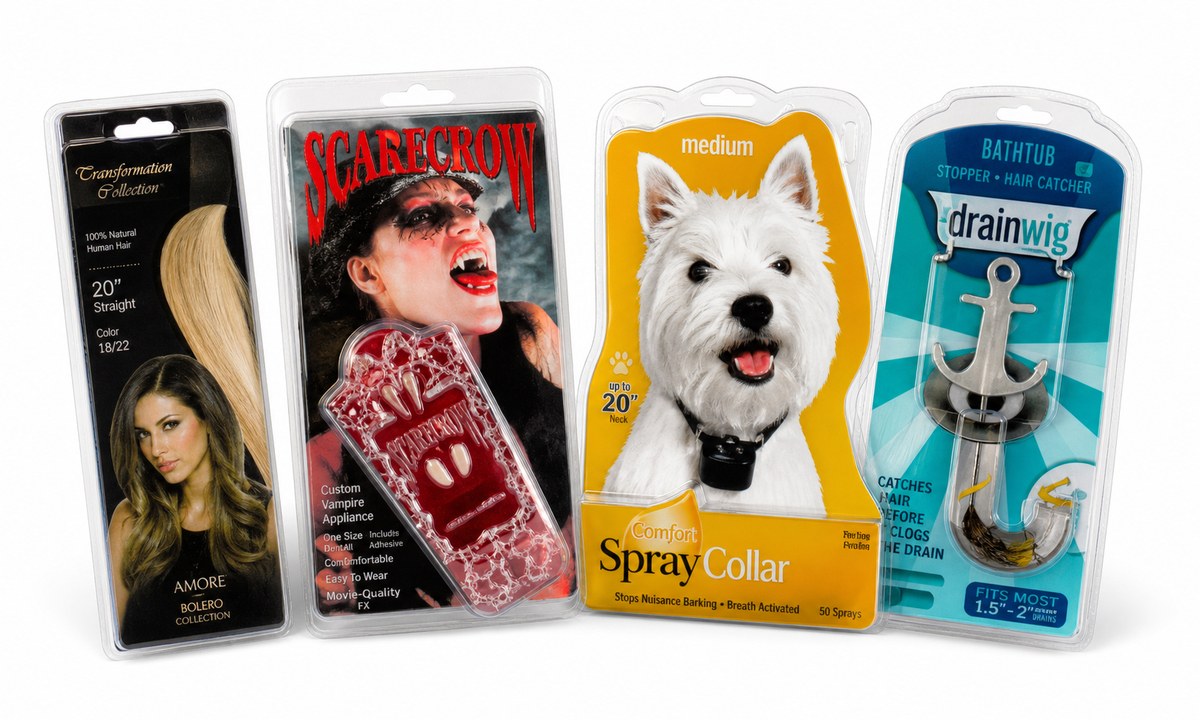
Clamshell packaging uses two rigid plastic halves connected by a hinge. When sealed, the enclosure resists crushing and forced opening. This format is commonly selected for products that require stronger retail protection and improved resistance against tampering or accidental opening.
Retailers frequently prefer clamshells in high-traffic areas. Manufacturers choose them when protection and security outweigh concerns about material usage.
Fold seal packaging uses a single paperboard sheet folded around the product and sealed at the edges. This approach reduces material usage and speeds assembly. It works best for lightweight items with lower theft risk where production speed and clean presentation matter more than heavy-duty protection.
Hardware and Tools
Hardware products face constant handling and theft risk. Blister packaging secures items while allowing customers to inspect size and finish. Our designs support heavier weights and repeated handling without seal failure.
Electronics and Accessories
Electronics require protection without hiding the product. Blister pack packaging shields components from dust and handling damage while limiting unauthorized access. Proper cavity design reduces movement during shipping.
Health, Beauty, and Cosmetics
Presentation influences buying decisions. Blister packaging supports clean display while protecting products from contamination. Card design carries instructions, ingredients, and compliance information clearly.
Automotive Parts and Accessories
Automotive parts often have irregular shapes and added weight. Blister pack formats protect parts from abrasion and moisture while supporting consistent hanging across stores.
Sporting Goods and Outdoor Equipment
Outdoor products often include sharp edges. Blister packaging secures items safely while remaining visible. Our designs hold up through shipping and seasonal retail cycles.
Household and Consumer Products
Household products move quickly through retail. Blister pack packaging supports fast restocking, clear labeling, and theft deterrence without constant redesign.
Can Blister Packaging Be Customized for Different Product Sizes and Shapes?
Yes. Blister packaging is designed to conform precisely to your product. This makes it one of the most reliable solutions for manufacturers who look for consistency, protection, and scalability.
Are you dealing with product damage, poor fit, or delays caused by custom tooling? The issue is not your product. It is the packaging approach. Blister packaging solves this by creating a structure that is built around your product, not forced around it.
Blister packaging is thermoformed to create a contoured cavity. It matches the exact shape of your product. This means each unit sits securely in its own formed space. Components remain separated and organized. There’s no need for shifting, overlap, or friction during transit. The risk of breakage, scratches, or misalignment reduces gradually.
This level of precision is especially valuable for:
Electronic devices and components
Small electronics and accessories
Hardware kits and multi-part assemblies
Consumer products with irregular shapes
The result is packaging that protects your product while also improving presentation and consistency across batches.
Outsourcing packaging works until volume increases or schedules tighten. Missed deadlines become expensive. Quality becomes inconsistent. Small changes require long approval cycles.
Owning a blister packaging machine puts control back on the production floor.
Powerpak Industries builds machines that support blister pack, clamshell, and fold seal formats. These machines are designed for manufacturing environments, not showrooms. They run quietly, require minimal maintenance, and integrate into existing workflows.
Manufacturers use our blister packaging machine systems to reduce dependence on third parties, protect product designs, and adjust schedules without waiting.
A blister pack uses a molded plastic cavity that holds a product in place and seals to a backing card or foil. The product stays visible. That visibility matters. Customers want to see what they are buying. Retailers want to reduce returns.
But blister packaging is not just plastic and paperboard. The cavity shape controls movement during shipping. The card stock controls hang strength. The seal method controls theft resistance. The display orientation controls how the product sits on a wall.
A functional blister packaging solution balances all of these details together. That is why blister packing continues to be used across categories where protection and visibility must coexist.
At Powerpak Industries LLC, we don’t just offer customization options that start from zero. We offer hundreds of pre-engineered stock blister molds, developed around real-life product categories and dimensions. In most cases, we already have a blister mold that closely fits your product.
What This Means For You
No investment needed in custom tooling for every new product
Faster turnaround times without development delays
Lower upfront costs and reduced packaging spend
Ability to standardize packaging across multiple SKUs
So you don’t have to redesign packaging for every variation. You can very well move forward with solutions that are already tested, available, and scalable.
When Custom Blister Tooling Is Actually Needed
Custom molds are only necessary in specific situations:
Your product has a highly unique or patented shape
It is oversized or outside standard dimensions
You require a very specific visual presentation or display format
For most applications, existing mold options already provide a secure and efficient fit, allowing you to avoid unnecessary complexity.
Even when using stock molds, blister packaging can be tailored to meet your operational and retail requirements.
You can:
Package multiple items in a single blister pack
Choose between trapped, full-seal, or tamper-evident designs
Customize card sizes, branding, and compliance details
Add retail-ready features like hang holes and display optimization
A flexible process like this allows you to maintain efficient work. Furthermore, it will also align the packaging and distribution needs of your brand.
Blister packaging can be fully customized to fit a wide range of product sizes and shapes, but the real advantage lies in doing it without added cost or delay. With Powerpak’s extensive library of stock molds, most businesses can achieve a precise fit without investing in custom tooling. You get faster production, better protection, and the ability to scale packaging across product lines with confidence.
Other PRODUCTS THAT WE PROVIDE
Blister Packaging Machinery By POWERPAK
The Original 4 Station Blister Clamshell Sealer
The Original Flip Sealer Blister Packaging Machine
The Original 4 Station Blister Clamshell Sealer Clean Room Model
2 Station Blister Clamshell Sealer Club Pack Model
Blister Packs
Clamshell Packaging
Foldover Packs
Fold-Seal™ Packaging
Folding Cartons
We built our process around clarity, speed, and accountability.
Step 1: Project Evaluation
We start by reviewing the product, its use environment, retail destination, and production goals. This step prevents design issues later and ensures the packaging matches real-world conditions.
Step 2: Design and Engineering
Our team creates CAD designs that account for product tolerances, seal strength, and display orientation. We also review card layout, hang hole placement, and material thickness at this stage.
Step 3: Prototyping and Testing
We produce prototypes to test fit, stability, and handling. Manufacturers review samples and request adjustments before committing to production tooling.
Step 4: Tool Development
Once approved, we develop tooling with shorter lead times than most competitors. This stage focuses on repeatability and long-term production efficiency.
Step 5: Production and Fulfillment
We schedule production quickly after approval. Packaging ships ready for retail or internal assembly based on customer needs.
Step 6: Repeat Orders and Scaling
Repeat orders move faster with established tooling. We also support inventory programs for high-volume manufacturers to reduce downtime.
Why Manufacturers Continue Working With Powerpak Industries
- One source for machines, tooling, and supplies reduces friction.
- Shorter production cycles reduce launch delays.
- Lifetime machine warranties protect long-term investments.
- US-based support improves response time.
- Experience comes from solving real packaging failures.
- Systems scale instead of breaking under growth.
- If packaging slows sales, increases shrink, or delays launches, the issue is rarely the product. It is the packaging system.
Powerpak Industries builds blister pack packaging systems that stay reliable under pressure.
What Actually Makes Us Different?
- Packaging designs that make tampering obvious, not subtle
- Tooling timelines that do not stall product launches
- In-house blister packaging machine options for companies tired of outsourcing delays
- Packaging formats already accepted by large retail chains
- Materials chosen for how they behave during handling, not just how they test on paper. As sustainability expectations continue to grow across retail industries, many manufacturers are also evaluating biodegradable packaging solutions that align environmental goals with long-term packaging performance.
More than 500 brands continue to work with us because the packaging holds up after repeated production runs.
WHY BRANDS LOVE US
Powerpak Industries is an exceptional company that I have had the pleasure of working with. Their dedication to providing the best blister packaging solutions is truly remarkable and has made them a top choice in the industry. I have had the pleasure of working closely with Bob and Melody, the dynamic duo behind Powerpak Industries, and I can confidently say that their passion for their work is unmatched. They are always willing to go above and beyond to ensure that their clients receive the best service possible. From the initial design stage to the final product, Bob and Melody are involved in every step of the packaging process, ensuring that every detail meets their high standards. Their attention to detail and commitment to quality is evident in the final blister packaging product, which is always top-notch. Working with Powerpak Industries has been a true pleasure, as their team is not only knowledgeable and professional but also friendly and approachable. They truly listen to their clients’ needs and work tirelessly to provide the best solutions for their packaging needs. It is no surprise that they have a loyal customer base, as they consistently deliver exceptional results. I highly recommend Powerpak for anyone looking for the best blister pack machine solutions and an outstanding customer experience. Bob and Melody’s dedication to their work and their clients is truly admirable, and I am grateful to have had the opportunity to work with such an amazing blister packaging company.
I have been working with Powerpak for ~5 years for our blister machine packaging needs. They have been very helpful selecting the right blister pack machine products for our business needs and have always been available if we had questions or needed help with our blister machine equipment. During a recent move from CA to NV, they also recalibrated our equipment and crated it for safe transport. Most recently we started a conversion from blister to enviro-friendly plastic free blister packaging which required several design iterations to capture the essence of a secure product in enviro-friendly packaging, but Powerpak was patient with our changes and went full throttle when it was time to print. As a small business, we love supporting other small businesses and are grateful to have Powerpak as our packaging partner.
Finding the Powerpak Blister Machine for our small business was the best thing that could’ve ever happened to our brand. We were able to accept an order for over 100,000 units and save over $20,000 by not having to pay a contract manufacturer to manage the job for us. This machine alone has significantly improved our blister packing machine capabilities and allows us to continue to grow our business due to the speed in which it completes our blister packaging machine. Not to mention, the customer service that Bob and Melody provide is unmatched. We are grateful for our relationship with Powerpak.
Throughout our 13-year partnership, Powerpak has exhibited exceptional service and dedication to our company. The quality of the products/services provided has been exemplary, consistently meeting and often surpassing our expectations. Powerpak has always accommodated and valued our business needs, and more importantly our relationship. Powerpak’s promptness in addressing our requirements, coupled with their reliability in meeting delivery deadlines, has greatly contributed to our operational efficiency. Thank you once again for your outstanding blister packaging service and collaboration to our company’s success. We value our partnership and look forward to continued growth together.
I have been working with Powerpak since the week I went into business 27 years ago. Someone recommended them to me and I have been a customer ever since. I cannot say enough about their integrity and how I was treated right from the beginning. They make the best blister machine packaging and take care of their customers 100%. Look no further if you are looking for a terrific team to work with.
I have been doing business with PowerPak Industries for about two years, and I have consistently received outstanding blister packaging customer service. Despite the small size of my company, which initially provided limited business for them, the PowerPak team exceeded expectations in accommodating my needs. I am extremely pleased with our business relationship and eagerly anticipate many more years of successful business growth, with complete confidence in our packaging!
We have been working with Powerpak for quite a few years now and they have been nothing short of amazing! Their blister packaging machinery products have always been high quality and the customer service is exceptional. Highly recommend.
Cherub Marketing has been using PowerPak for over 25 years. We sell products to the U.S. military—it has to be perfect every time.Thank you, PowerPak, and thank you to the PowerPak team.
You’re the best.Cherub marketing,inc. 10436 artesian springs ct
FAQS.
What is a blister pack?
What is blister packaging used for?
How do I choose the right blister pack for my product?
When should manufacturers use blister packaging instead of boxes or pouches?
What products work best with blister pack packaging?
When should I use blister card packaging for retail sales?
Is blister packing suitable for high-volume manufacturing?
When does it make sense to use a blister packaging machine in-house?
What Are the Typical Costs of Outsourced Blister Packaging?
What Are the Typical Lead Times for Outsourced Blister Packaging?
What Types of Products Are Best Suited for Blister Packaging?
When Should You Use Blister Packaging and When Should You Avoid It?
What Are the Real Costs of Outsourcing Blister Packaging — and When Does It Make Sense?
When Should You Switch to In-House Blister Packaging?
A blister pack is a type of packaging that uses a clear, molded plastic cavity sealed to a backing card or aluminum foil to hold a product securely. It allows customers to see the product while protecting it from damage, contamination, and tampering. Blister packs are commonly used for retail products that hang on display walls.
Blister packaging is used to protect products, prevent theft, and improve shelf visibility in retail environments. Manufacturers use it to keep products secure while allowing customers to inspect them visually before purchase. It is widely used for tools, electronics, health products, cosmetics, and consumer goods.
The right blister pack depends on product weight, theft risk, retail display method, and budget. Lightweight items often work well with standard blister cards, while heavier or high-value products benefit from trapped or clamshell designs. Evaluating shelf placement, hang hole requirements, and handling frequency helps ensure the packaging performs in real retail conditions.
Manufacturers should use blister packaging when product visibility, tamper resistance, and retail compliance matter. Blister packaging allows customers to see the actual product, reduces theft, and holds items securely in high-traffic retail environments. Many retailers also prefer tamper evident packaging because it helps discourage product interference while improving consumer confidence on crowded retail shelves. It is especially effective for products sold on peg walls or open displays, where boxes or pouches are more prone to damage or opening.
Blister pack packaging works best for products that benefit from clear display and secure holding. Tools, electronics, batteries, automotive parts, cosmetics, and accessories commonly use blister packs. Products with irregular shapes or small components also perform well in blister pack packaging because the molded cavity prevents movement and damage during shipping and handling.
Blister card packaging works best when products require strong branding, clear instructions, and consistent hanging performance across retail stores. Many brands also combine blister formats with folding carton packaging to improve shelf presentation, secondary protection, and retail branding consistency. The printed card supports marketing, barcodes, and compliance details, while the sealed blister protects the product. Retailers often prefer blister card packaging because it displays cleanly and reduces theft compared to loose or boxed items.
Yes, blister packing is well-suited for high-volume manufacturing when consistency and efficiency are required. The process supports repeatable sealing, uniform presentation, and scalable output. With proper tooling and workflow, blister packing reduces labor variability and helps manufacturers meet tight production schedules without sacrificing packaging quality.
Using a blister packaging machine in-house makes sense when manufacturers want control over production timelines, quality standards, and costs. In-house machines reduce dependence on third-party packers, allow faster changes, and support smaller production runs without long delays. This approach works well for manufacturers with recurring packaging needs or frequent product updates.
Outsourced blister packaging involves several cost components beyond just the per-pack price.
Tooling & Setup: Most contract packagers charge $1,000 to $10,000+ for custom tooling, plus additional engineering and setup fees, making the initial investment significant for new or low-volume products.
How Powerpak Compares:
- Stock mold fee: $0
- Custom tooling: $500 to $750 (one-time)
- Proofing fee: $325 (one-time)
Lower tooling costs mean you can test new products, reduce financial risk, and launch faster without committing thousands upfront. If your product fits an existing stock mold, common in categories like fishing tackle, you may pay no tooling costs at all.
Lead time directly affects your ability to launch and scale and traditional outsourcing is often slower than expected.
Industry-Standard Timelines:
- Tooling development: 3–8 weeks
- Production scheduling: 2–4 weeks
- Total turnaround: 4–12+ weeks
Delays are common due to contractor queues, custom tooling development, and back-and-forth approvals.
How Powerpak Speeds Things Up: By using stock molds, Powerpak eliminates tooling delays entirely, cutting weeks off the process. Faster proofing, flexible scheduling, and pre-built mold options mean you move from concept to production significantly faster than with traditional contract packagers.
Blister packaging works best for products that need visibility, protection, and organized retail display.
- Hardware, Tools & Knives Drill bits, screws, folding knives, and small hand tools stay secure and visible, helping customers assess quality before buying.
- Gun Accessories & Tactical Gear: Cleaning kits, optics accessories, and mounting hardware benefit from blister’s durability and tamper-resistant protection.
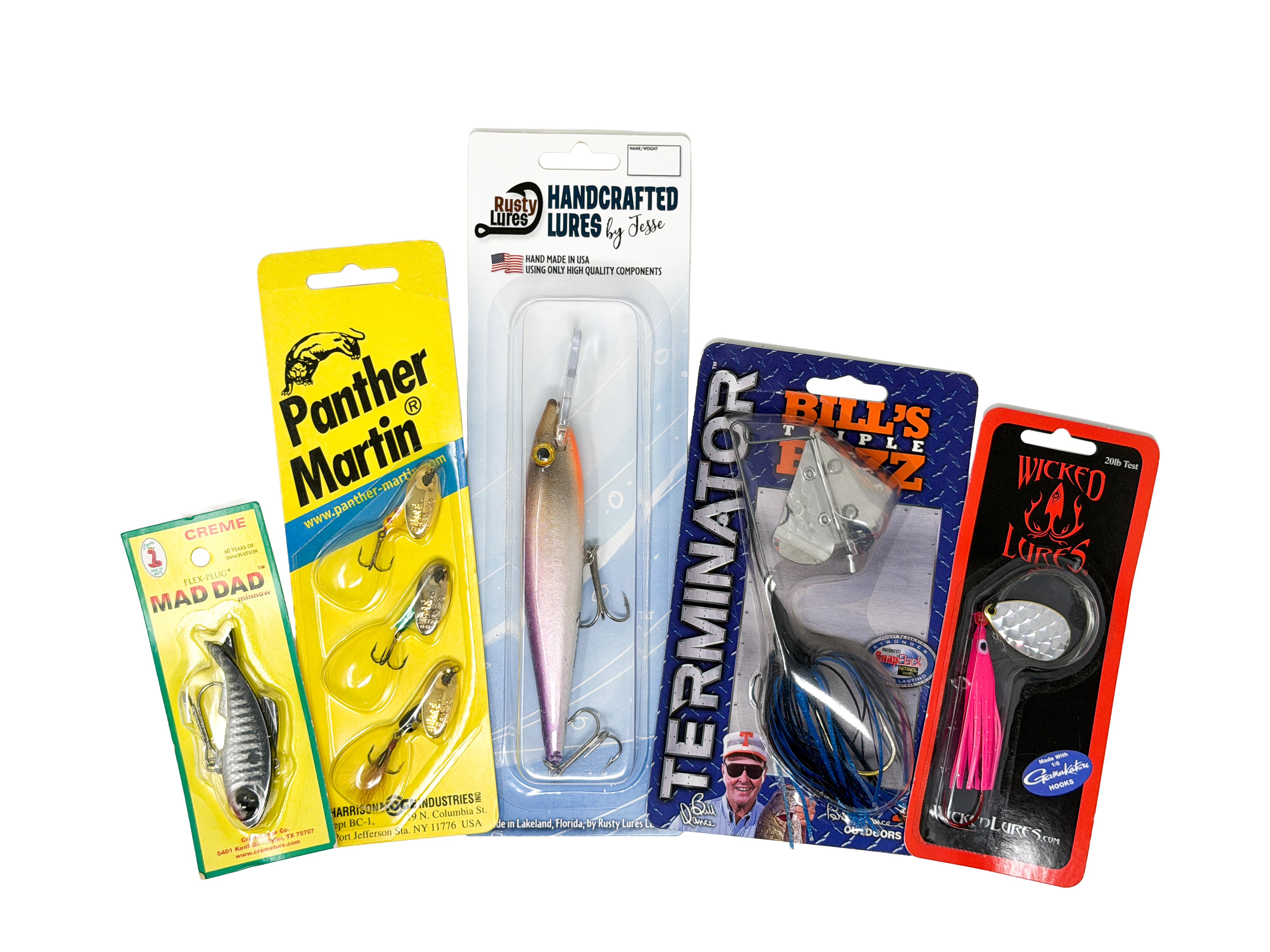
- Fishing Tackle & Outdoor Gear Lures, hooks, and weights are widely packaged in blisters. Clear plastic showcases colors and details critical for customer decisions. Manufacturers looking for specialized fishing lure packaging often choose blister formats because they improve product visibility while protecting sharp components during shipping and retail handling.
- Electronics & Accessories Batteries, cables, earbuds, and small gadgets stay organized, protected, and shelf-ready.
- Beauty & Personal Care Razors, grooming kits, and cosmetics tools benefit from strong backing card branding with full product visibility.
- Pet Products & Toys Small pet accessories, collectibles, and hobby items stay contained, visible, and retail-ready.
Not every product is a good fit for blister packaging. Here’s a quick guide:
Use Blister Packaging If Your Product:
- Is small to medium-sized
- Needs pre-purchase visibility
- Will be displayed on pegboards or shelves
- Requires tamper resistance
- Has multiple small components
Avoid It If Your Product:
- Is very large or heavy
- Requires a premium unboxing experience
- Is highly fragile without internal support
Bottom Line: If your product is small-to-medium and retail-shelf-bound, blister packaging is likely your best option. When in doubt, test with a stock mold before committing to custom tooling. However, brands focused heavily on customer unboxing experience may also compare blister formats with frustration free packaging approaches designed to reduce excessive sealing and difficult opening experiences.
Outsourcing blister packaging comes in two forms:
Option A: Using the Contract Packager’s Equipment No upfront investment and fully managed, but higher per-pack costs and limited production control. Works well early on but gets expensive at scale.
Option B: Using Your Own Equipment at a Partner Facility A hybrid model with lower per-pack costs, better quality control, and a smoother path to in-house production down the line.
Hidden Costs to Watch For: Per-pack pricing, labor, and freight add up over time, making in-house production increasingly attractive as volume grows.
The Smarter Approach (Powerpak Model):
- Start with outsourcing
- Reduce costs using your own equipment at a partner facility
- Transition in-house when volume justifies it
Some packaging networks also partner with handicap workshops, supporting meaningful employment alongside quality output.
In-house blister packaging is more accessible than most businesses expect and offers the best long-term cost savings and control.
Getting Started:
- Entry-level machines start around $150.
- Minimal space requirements
- Ideal for startups testing before scaling
Key Benefits of Going In-House:
- Full quality control over sealing, finish, and branding
- No per-pack fees; equipment pays for itself over time
- Package on demand with no third-party dependency
- Clean, retail-ready output that improves customer perception
Not Ready Yet? You can still achieve premium results by working with trusted contract packagers while staying flexible.
Bottom Line: Outsourcing works best early on; in-house wins long-term. The key is knowing when your volume justifies the switch.